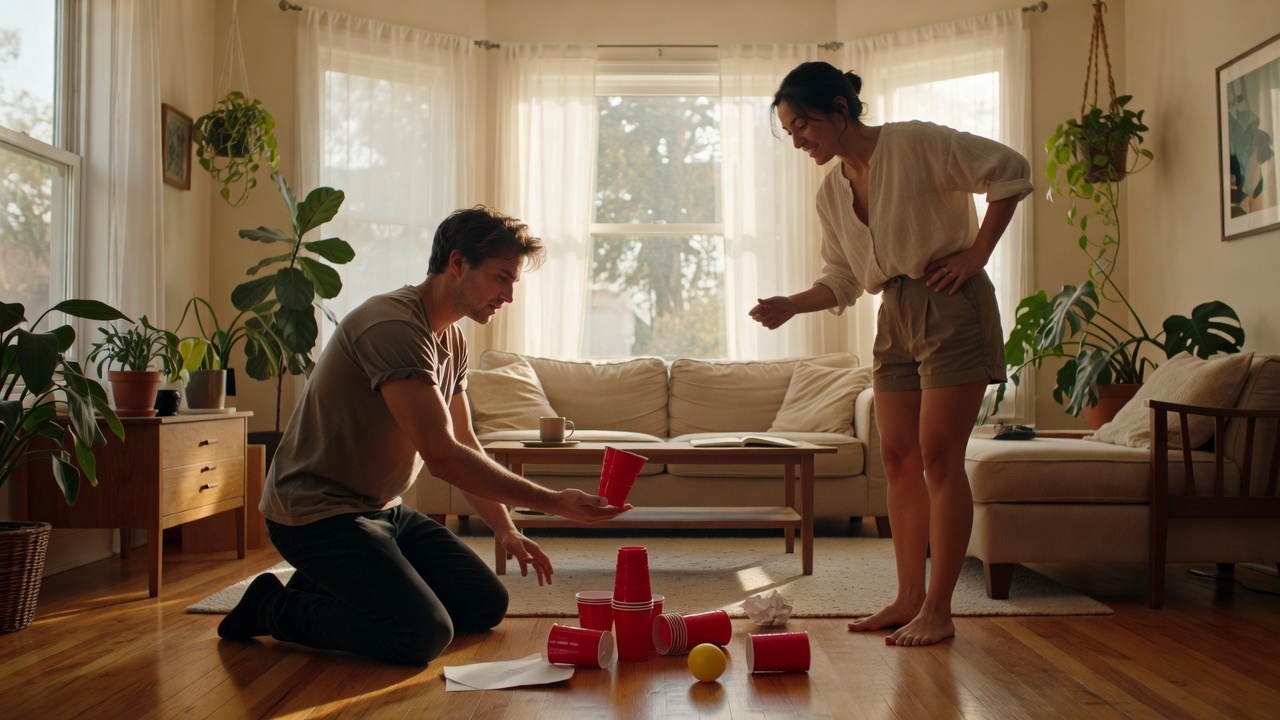
Write the move before the caption
Start with one sentence that describes something a participant can actually do. “Turn an ordinary object into a pretend film prop, then reveal what it really is” is actionable. “Join our creative movement” is not. Your sentence should identify the move without needing a particular soundtrack, an inside joke or a long explanation. If it takes several clauses to explain, separate the essential action from the optional flourishes.
Next, write who the invitation is for. A format for friends who enjoy making tiny sets can be more useful than a vague invitation to everyone. You are not excluding other people; you are choosing a clear starting context. Avoid describing the audience only as a source of views. Think about what they enjoy making, what resources they have and what they might reasonably want to share.
Give the format a stable centre
A repeatable challenge needs something recognisable across versions. In the prop example, the stable centre is the reveal: an everyday object becomes something imaginary, then returns to its ordinary identity. The participant chooses the object, the story and the filming style. That balance lets people recognise the format without turning every contribution into a copy of your original recording.
Show one deliberately simple version. If your launch example requires expensive lights, a dramatic location or complicated editing, viewers may mistake those details for entry requirements. Add a written alternative: a sequence of still pictures, an illustrated version or an audio-described explanation. An accessible route should be part of the invitation, not an exception someone has to negotiate privately.
Choose platform tools after the idea
TikTok’s Duet and Stitch are examples of tools that can connect a response to an existing video. YouTube Shorts offers remix options, subject to the source content and current settings. These tools can make a handoff visible, but they are not permission to reuse anything you find online. Review the platform’s current guidance and the original creator’s settings before building a format around a feature.
Music needs its own check. Availability inside one app does not automatically establish permission for a download, an advertisement or a repost elsewhere. The YouTube Audio Library is one place to inspect track-specific conditions for a YouTube project. Creative Commons licences offer another framework for some materials, but conditions differ. Record the source and terms rather than relying on a memory that something was “free.”
Run a comprehension rehearsal
Invite a willing collaborator to read the prompt without watching your polished example first. Ask them to describe what they would do, what they would need and which parts feel optional. This is not a test of the person. It is a test of the invitation. If they misunderstand the reveal, simplify the wording or change the demonstration instead of adding pressure.
Then try a rough recording. Notice setup time, awkward transitions, distracting background details and whether the action works without sound. Do not treat a successful rehearsal as evidence of future reach. It tells you that a particular person could understand and perform the format in a particular setting. That is valuable, limited evidence—and a better basis for revision than guessing.
Publish boundaries alongside the prompt
State what participation does not require: buying a product, revealing a home address, filming a stranger or tagging someone repeatedly. Say whether you intend to feature submissions and how permission will be requested. A public hashtag is not a substitute for asking before downloading and republishing someone’s contribution. Leave people a way to ask for a correction without doing it in a public comment thread.
Finally, decide what would make the experiment worth keeping. You might want a clearer prompt, a handful of imaginative variations or a collaborator who wants to work together again. Save the original brief and a short revision note. If the action is confusing, uncomfortable or not enjoyable, change it or retire it. A responsible challenge can end without needing a dramatic failure story.
Source shelf
Platform features and permissions can change. These official resources explain the tools and licensing frameworks mentioned above; they do not guarantee distribution.